
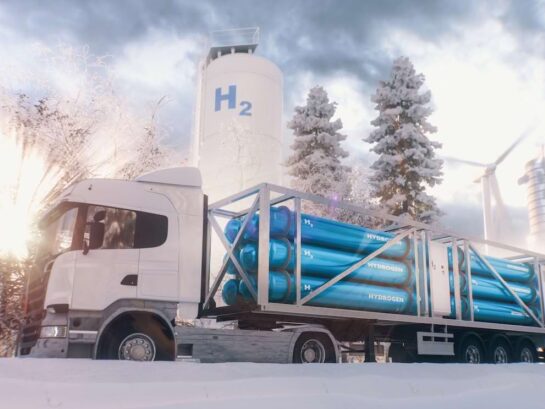
When people think about hydrogen system cleaning, they usually think about particles and residue. But moisture is just as critical, and it is often the step that gets underspecified or rushed.
Residual moisture in hydrogen piping, tanks, and components can freeze into ice plugs in cryogenic lines, poison PEM fuel cell membranes, degrade gas purity below ISO 14687 thresholds, and accelerate corrosion that generates new particulate contamination.
In Parts 1 and Part 2 of this series, we covered how hydrogen particulate contamination causes failures and how NVR testing verifies cleanliness. This post addresses the other half of the cleanliness equation: getting your system dry enough to perform.
Hydrogen system drying is not just about removing water. It is about removing all moisture and solvent vapors to a verified, quantified dew point before hydrogen is ever introduced. This post covers why moisture matters across different applications, how drying and purging actually work, what dew point you should specify, and the most common mistakes that compromise an otherwise clean system.
Table of Contents
Key Takeaways:
- Moisture is as critical as particulates in hydrogen system cleaning, and often the step that gets rushed. Residual water can freeze into ice plugs, poison fuel cell membranes, degrade gas purity, and drive corrosion that generates new particulates.
- The moisture hazard changes completely by application. In cryogenic systems, water freezes into ice plugs that can block pressure relief devices. In PEM fuel cells, contamination moisture carries dissolved metal ions into the membrane. In storage and transport, it degrades purity and corrodes carbon steel.
- Cryogenic systems require helium purging, not nitrogen. Nitrogen condenses to liquid at -196°C and freezes at -210°C, both above liquid hydrogen temperature, so residual nitrogen would create the same ice-plug hazard as water.
- Dew point targets vary widely. Cryogenic and fuel cell applications need -60°C to -80°C, while transport and storage typically run -40°C to -60°C. The ASME B31.12 pipeline limit of 20 ppm water explains why trailers get a less stringent spec than dispensed fuel.
- The purge gas itself must be verified clean and dry. Shop air, oil-contaminated generator nitrogen, and wet bottled nitrogen all defeat the purpose. The drying is only as good as the gas used to do it.
- "Dry" is not a specification. A quantified dew point, verified by a calibrated hygrometer at the outlet farthest from the purge inlet, is the only way to confirm a system is actually dry, not just assumed dry.
- The clean/dry envelope must be maintained after drying. Opening a flange, installing a wet component, or pressure testing with non-dry gas reintroduces moisture, requiring the affected section to be re-purged and re-verified before service.
Why Moisture Is a Problem in Hydrogen Systems
The right hydrogen system drying approach depends on the temperature, pressure, and purity requirements of the system, because moisture causes different problems in each. Here is how it plays out across the major hydrogen applications.
Cryogenic and Liquid Hydrogen Systems
Liquid hydrogen exists at roughly -253°C. At that temperature, any residual moisture freezes solid almost instantly, forming ice on valve stems, seats, and packing. That ice causes valve seizure, blocks flow paths, and, most dangerously, can plug the lines leading to pressure relief devices. A blocked relief path on a cryogenic vessel is a catastrophic failure waiting to happen, which is why hydrogen system drying for cryogenic service is held to the most demanding dew point targets of any application.
This is also why cryogenic systems are purged with helium rather than nitrogen. Nitrogen condenses to a liquid at around -196°C and freezes solid at -210°C, both well above liquid hydrogen temperature, so residual nitrogen would create the same ice-plug hazard as water. In space launch operations, ice in cryogenic hydrogen lines can delay launch and force time-consuming warmup, purge, and re-dry cycles.
PEM Fuel Cells
PEM fuel cells are a nuanced case. They actually require controlled humidification to operate, because the membrane needs water for proton conduction. The problem is not moisture itself but PEM fuel cell moisture contamination: uncontrolled water introduced during assembly or carried in from contaminated supply piping.
That kind of moisture acts as a transport vector, picking up dissolved metal ions from corroded piping, brass fittings, and poorly cleaned surfaces and carrying them into the membrane electrode assembly. Once there, those ions displace protons, increase resistance, and catalyze chemical attack that leads to pinholes and crossover leaks.
Repeated wet/dry cycling from intermittent contamination has been shown to delaminate the membrane assembly outright. Balance-of-plant piping, humidifiers, and heat exchangers all need thorough drying before assembly and commissioning.
Gaseous Hydrogen Storage and Transport
In storage tanks and tube trailers, moisture causes two distinct problems. First, it degrades gas purity. ISO 14687 sets a maximum water content of 5 ppm at the dispenser nozzle for fuel cell vehicle applications, and any carry-over from wet piping or inadequately dried vessels can push hydrogen out of spec before it reaches the vehicle.
Second, in carbon steel components, moisture drives corrosion. Wet conditions accelerate electrochemical corrosion of iron, generating iron oxide particulates that then circulate with the gas stream, abrading seals and plugging filters. This is exactly the kind of particulate failure described in Part 1 of this series, and moisture is the primary enabler.
Tube trailers that are not properly dried between service cycles can carry moisture from one load to the next, progressively degrading delivered hydrogen purity. It is worth noting that pipelines and trailers often work to a less stringent moisture limit than dispensed fuel.
The ASME B31.12 hydrogen pipeline code allows up to 20 ppm water, which is why transport and storage systems are typically dried to a -40\u00B0C dew point while dispensed fuel targets -60\u00B0C or lower.
Electrolyzers and Reformers
Electrolyzers produce hydrogen saturated with water vapor, since the reaction happens in an aqueous environment. That moisture has to be removed in stages before the hydrogen reaches storage or compression, and both the hydrogen and oxygen output sides need attention. Inadequate pre-commissioning drying leaves residual water from test water, hydrotesting, or ambient humidity in the system, producing off-spec output during early operation.
In natural gas reformers, moisture in the feed gas overwhelms the guard layer of pressure swing adsorption (PSA) beds, saturating the adsorbent faster than designed and causing premature breakthrough of impurities into the hydrogen product. Drying the reformer plant piping and vessels before commissioning reduces the initial moisture load on the PSA and helps achieve spec output from the first start.
How Hydrogen System Drying and Purging Works
After precision cleaning, residual moisture and solvent vapors have to be actively removed. You cannot simply let a system air dry, which introduces new contaminants and is far too slow to reach the dew points hydrogen service requires. Hydrogen system drying uses several methods, chosen based on the application.
Dry Nitrogen Purge
The workhorse method for gaseous hydrogen systems is hydrogen system nitrogen purging with dry, oil-free nitrogen. Nitrogen, typically with a source dew point of -40°C or better, is introduced at one end of the system and flows through to the opposite end. The purge gas carries moisture-laden gas out ahead of it, while the low water vapor partial pressure in the dry nitrogen pulls residual moisture off the internal surfaces. The key is that the purge continues until the dew point at the outlet stabilizes at or below the target, not merely for a fixed time.
Helium Purge for Cryogenic Systems
For liquid hydrogen service, nitrogen cannot be the final purge gas because it freezes before reaching hydrogen temperatures. Helium is the only practical alternative, remaining gaseous at all temperatures above absolute zero. A common approach is two-stage: an initial nitrogen purge displaces air and bulk moisture, followed by hydrogen system helium purging to displace the nitrogen before liquid hydrogen is introduced. This is standard practice in aerospace and space launch hydrogen operations.
Heated Nitrogen and Vacuum-Assisted Drying
For systems holding large amounts of residual moisture, such as those that have undergone hydrostatic testing, ambient-temperature purging can be slow. Heated nitrogen purge raises the vapor pressure of residual water to accelerate evaporation, and a “sweep and soak” variant alternates active flow with static soak periods to pull moisture off surfaces.
Vacuum-assisted drying lowers system pressure so residual water boils off at ambient temperature. One caution: the vacuum must be drawn slowly. If pressure drops below the triple point of water too quickly, the water freezes into ice instead of evaporating, trapping the moisture you are trying to remove.
Why the Purge Gas Itself Must Be Clean and Dry
Hydrogen system purge and dry services are only as good as the purge gas used. Shop air is moisture-saturated and oil-laden, nitrogen from compressor-based generators can carry oil, and even bottled nitrogen can have moisture ingress. The purge gas must be independently verified as dry and oil-free before use, and connection hoses should be pre-dried so hookup does not reintroduce moisture.
Flow Path and Dew Point Verification
Flow path design determines whether hydrogen system drying actually works. The purge gas inlet and outlet must drive flow through every branch, dead leg, and low point, because sections outside the flow path will not dry regardless of purge duration. Dew point is measured with a calibrated hygrometer at the outlet, specifically the point farthest from the inlet, where moisture lingers longest. Measurement should be continuous or at regular intervals, and the full process documented: purge gas type and purity, flow rate, duration, and dew point readings over time. That dew point record becomes part of the hydrogen system drying verification package, alongside the NVR and particulate results from Part 2.
What Dew Point Should You Specify?
Dew point requirements for hydrogen system drying vary widely by application. Getting the number right in your specification avoids both under-drying, which risks system problems, and over-drying, which wastes time and purge gas on an unnecessarily stringent target. Here are typical atmospheric dew point targets by application.
- Liquid hydrogen / cryogenic: -60°C or lower, often -70°C to -80°C, to prevent any ice formation at cryogenic temperatures.
- PEM fuel cell gas supply: roughly -60°C to -66°C, derived from the ISO 14687 limit of 5 ppm water. Always confirm against the stack OEM’s requirement.
- Gaseous fueling stations: dew point sufficient to hold the ISO 14687 limit of 5 ppm water at the dispenser nozzle.
- Storage and transport (trailers, tanks): typically -40°C to -60°C, depending on operator and end use.
- Electrolyzer output (after dryer): -70°C or lower, matching or exceeding ISO 14687 fuel quality requirements.
One technical note that affects every hydrogen system drying spec: for pressurized systems, the relevant quantity is the pressure dew point at actual operating pressure, not the atmospheric dew point of the dry gas alone. When interpreting a measurement taken at line pressure, the pressure correction must be applied.
The practical takeaway: a quantified dew point belongs in every drying spec. “Dry” is not a number. “-40°C dew point at the system outlet, verified by calibrated hygrometer with NIST-traceable calibration” is. If you are unsure what to specify, a qualified hydrogen fuel line drying contractor can advise based on your application and the governing standards.
Common Hydrogen System Drying Mistakes
Even experienced teams get hydrogen system drying wrong. These failures show up most often during commissioning, and nearly all of them trace back to the same handful of shortcuts.
- Assuming “dry enough” without measurement. This is the single most consequential mistake. Declaring a system dry based on elapsed time or number of purge volumes, rather than a verified dew point reading, ignores how variable moisture desorption actually is. A system that reads dry at the inlet after three hours can still sit at -10°C dew point at the far end of the piping.
- Using contaminated purge gas. Wet nitrogen bottles, oil carryover from compressor-based generators, and shop air substitution all defeat the purpose. Verify the purge gas dew point independently before use. A dedicated filter and dryer on the supply line is cheap insurance.
- Rushing the purge on large or complex systems. Simple volume-replacement calculations fail for large-diameter piping or systems with many dead legs. Moisture desorption from surfaces, not just dilution of gas-phase moisture, governs the final stages of drying, and that takes longer than most people expect.
- Measuring dew point at the wrong location. A reading at the purge inlet only confirms that dry gas is going in, not that the system has dried. Measure at the outlet farthest from the inlet, and in branched systems, measure each separately purged branch.
- Breaking the clean/dry envelope after drying. Opening a flange for a final component, installing a wet valve that was stored without end caps, or pressure testing with non-dry gas all reintroduce moisture. Any time the envelope is broken, the affected section must be re-purged and re-verified before being sealed and returned to service.
- Ignoring solvent vapor removal. If solvent-based cleaning was used, drying has to remove residual solvent vapor, not just water. Solvent vapor can condense in cold sections, poison PEM catalysts at sub-ppm levels, and pose a fire hazard in a hydrogen atmosphere. The purge should continue until solvent vapor is below detectable levels.
How PFC Handles Hydrogen System Drying
At Precision Fabricating & Cleaning, hydrogen system drying and dew point verification are built into every cleaning job. Drying is not a separate service or an afterthought. It is a core part of the process, because a system that is not verified dry is not truly clean.
- Nitrogen and helium purging with verified clean, dry, oil-free gas, matched to the application and operating temperature
- Calibrated dew point measurement with documented readings throughout the drying process, not just a final spot check
- ISO 14644 cleanroom drying environments that prevent recontamination during the drying step
- Clean packaging immediately after verification to maintain the dew point through shipment and installation
- Experience across hydrogen applications including cryogenic hydrogen lines, PEM fuel cell balance of plant, electrolyzer output piping on both hydrogen and oxygen sides, reformer systems, and storage and transport equipment
PFC performs cleaning, drying, and verification in-house at its controlled cleanroom facility. Components, spools, skids, and assemblies are shipped to PFC, cleaned and dried to a verified dew point, then clean-packaged and returned ready for installation.
This shop-based approach gives you a level of environmental control that field cleaning cannot match, and field work can be arranged on a limited basis when a project requires it. Whether you need hydrogen pre-commissioning cleaning and drying for a new build or hydrogen system moisture removal for equipment returning to service, the goal is the same: a system verified dry to a documented dew point before hydrogen is introduced.
Your hydrogen system is only as clean as it is dry. Contact Precision Fabricating & Cleaning today to discuss your precision cleaning requirements, dew point targets, and project timeline.