
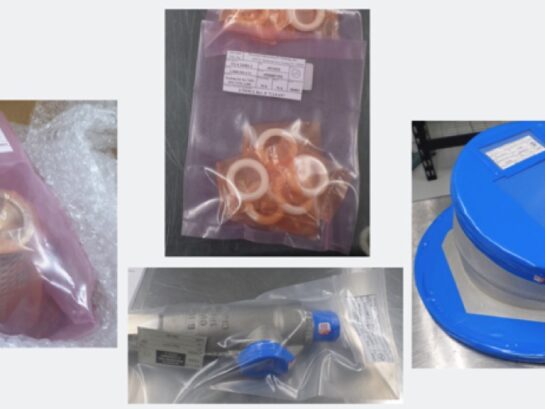
Precision cleaned parts represent a significant investment in time, expertise, and resources, but that investment means nothing if contamination occurs before installation. Every component that leaves a cleanroom has been meticulously processed to meet stringent cleanliness specifications, yet the journey from cleaning facility to final assembly presents countless opportunities for recontamination.
For industries like aerospace, defense, and space exploration, the stakes couldn't be higher. A single particle in the wrong place can compromise a fuel system, damage sensitive instrumentation, or cause catastrophic mission failure. Companies like Boeing, SpaceX, Lockheed Martin, and NASA don't just require precision cleaning, they require absolute assurance that cleanliness is maintained through storage, shipping, and handling.
This is where many organizations underestimate the challenge. Proper packaging isn't simply about placing parts in a bag and sealing it shut. It requires a strategic, multi-layered defense system where every material, seal, and protective layer serves a specific purpose.
Table of Contents
Key Takeaways
- Single-barrier packaging isn't enough. Precision cleaned parts require multiple protective layers, each addressing different contamination and damage threats.
- Material selection depends on service media. Aclar is required for oxygen service, nylon works for fuel and GN2 applications, and polyethylene serves as the standard secondary barrier.
- Sealing technique matters as much as material choice. Heat sealing with proper temperature, pressure, and nitrogen purging creates the leak-tight, inert environment that maintains cleanliness.
- Different components require different approaches. Gauges can't be vacuum-sealed, filter elements need snug-fitting bags, and sharp edges demand extra cushioning layers.
- Desiccants and humidity indicators protect parts during long-term storage. Proper placement and preparation ensure these tools work effectively without compromising cleaned surfaces.
- Documentation and tamper evidence maintain traceability. Certification labels and tamper-proof decals give customers confidence that parts haven't been compromised before installation.
The Hidden Cost of Recontamination
When packaging fails to protect precision cleaned parts, the consequences extend far beyond the cost of re-cleaning. Contamination that goes undetected can lead to system malfunctions, equipment damage, and in critical applications, complete mission failure. For aerospace and defense components, these failures carry implications for both safety and national security.
The threats to cleanliness are varied and persistent. Airborne particulates can settle on exposed surfaces within seconds of leaving a controlled environment. Moisture and humidity promote corrosion on metal components, while oxygen exposure can degrade sensitive materials over time. Even physical handling introduces risks, fingerprints leave behind oils and residues that compromise surface integrity, and improper cushioning allows parts to shift and generate particulates through friction.
Consider the economics: precision cleaning a single component can cost hundreds or thousands of dollars depending on complexity and cleanliness requirements. If improper packaging allows recontamination, that entire investment is lost. Worse, if contamination isn't caught before assembly, the costs multiply exponentially through rework, delays, and potential system failures.
This is precisely why a single bag is never sufficient protection. Effective packaging must address multiple threat vectors simultaneously, and that demands a layered approach.
How Layered Packaging Protects Precision Cleaned Parts
The fundamental principle behind packaging precision cleaned parts is redundancy. No single barrier can address every contamination threat, so effective protection requires multiple layers working together as a system. Each layer serves a distinct function, and together they create a defense strategy that safeguards cleanliness from the moment parts leave the cleanroom until final installation.
The Primary Barrier
The first layer, known as the primary or inner barrier, makes direct contact with the cleaned component. This barrier must be fabricated from materials that meet or exceed the cleanliness level of the part itself. Its job is to create an immediate, sealed environment around critical surfaces, particularly wetted surfaces that will contact service media during operation.
The Secondary Barrier
The second layer provides environmental protection around the sealed inner package. This outer wrap shields against moisture vapor, physical abrasion, and external contaminants that could compromise the primary barrier's integrity during handling and transit.
Additional Protective Layers
For many applications, further protection is necessary. Cushioning materials like dimple wrap prevent physical damage and absorb shock during shipping. Rigid outer containers guard against crushing and puncture. When precision cleaned parts must travel across the country or sit in storage for extended periods, each layer becomes essential to maintaining the cleanliness achieved during processing.
This multi-barrier philosophy isn't arbitrary, it reflects decades of industry experience and is codified in specifications from NASA, the Department of Defense, and major aerospace contractors. The question isn't whether to use multiple layers, but rather which materials and techniques are appropriate for your specific application.
Aclar, Nylon, or Polyethylene? Matching Materials to Service Requirements
Not all precision cleaned parts require the same packaging materials. The service media that a component will encounter during operation dictates which films are appropriate for the primary barrier. Choosing the wrong material can compromise cleanliness or introduce compatibility issues, while choosing a more expensive material than necessary wastes budget without adding value.
Here's how the three primary packaging films compare:
Aclar (Fluorohalocarbon Film)
Aclar represents the highest level of protection and is required for parts that will contact liquid or gaseous oxygen, hydrogen peroxide, oxidizers, or hypergolic propellants. Its chemical inertness makes it safe for the most demanding aerospace applications. Aclar conforms to SAE-AMS 3649 specifications and typically ranges from 1.5 to 3.0 mils in thickness. However, this performance comes at a premium, Aclar costs significantly more than other packaging films, sometimes by a factor of ten or more.
Nylon 6 (Polyamide Film)
For components in gaseous nitrogen, helium, or fuel service, Nylon 6 provides excellent primary barrier protection at a more moderate cost. With thicknesses ranging from 1.7 to 2.3 mils, nylon offers strong puncture resistance and reliable sealing characteristics. It's the workhorse material for precision cleaned parts that don't require oxygen-compatible packaging.
Polyethylene
Polyethylene serves primarily as a secondary barrier or overwrap material, providing environmental protection and moisture resistance. At 5.4 to 6.6 mils thickness, it's the most economical option and can be used as a primary wrap for items cleaned to lower cleanliness levels. All precision cleaned parts, regardless of service media, typically receive a polyethylene outer layer for secondary protection.
The key takeaway: material selection should always be driven by the end-use application and customer specifications. Using Aclar where nylon would suffice inflates costs unnecessarily, but substituting nylon where Aclar is required creates serious safety and performance risks.
Heat Sealing and Nitrogen Purging: Locking in Cleanliness
Selecting the right packaging materials is only half the equation. How those materials are sealed determines whether precision cleaned parts remain protected throughout storage and transit. A poorly executed seal can allow moisture ingress, oxygen exposure, and particulate contamination, negating the benefits of even the highest-quality barrier films.
Heat sealing is the primary closure method for both primary and secondary barriers. When performed correctly, it creates a leak-tight seal that maintains the inert atmosphere inside the package. But proper technique matters: temperature, pressure, and dwell time must be calibrated to the specific film being sealed. Wrinkles or folds at the seal point create channels for contamination, so technicians must ensure the film lies flat before sealing.
Equally important is removing residual air from the package before closure. Extracting or evacuating air serves two purposes:
- Prevents part movement. When precision cleaned parts shift inside loose packaging, they generate particulates through friction against the barrier film.
- Reduces moisture and oxygen. Ambient air contains humidity and reactive oxygen that can promote corrosion or material degradation over time.
For applications requiring maximum protection, nitrogen purging takes air evacuation a step further. Before final sealing, the package interior is flushed with filtered dry gaseous nitrogen conforming to MIL-PRF-27401 or A-A-59503 specifications. This creates a completely inert environment, nitrogen doesn't react with metal surfaces or introduce moisture. The result is a sealed package that can protect components for extended storage periods without degradation.
Pressure-sensitive tape also plays a supporting role, securing wraps and closures where heat sealing isn't practical. Tape must conform to A-A-1689 specifications and should never be stretched during application, as this causes seal failure over time. A simple best practice: fold the outer end of the tape back on itself to create a half-inch tab, making removal easier and reducing the risk of damage when unpacking precision cleaned parts at their destination.
Specialized Packaging Approaches for Different Hardware
Different components present unique packaging challenges. A small o-ring requires a very different approach than a pressure transducer or a length of tubing with flanged ends. Understanding these distinctions ensures that precision cleaned parts receive appropriate protection based on their geometry, sensitivity, and end-use application.
Small Parts: Fittings, Seals, and O-Rings
Small items should be placed in individual inner bags made from nylon or Aclar, depending on service requirements, and heat-sealed. Prior to final sealing, the bag should be purged with filtered gaseous nitrogen. Once individually packaged, small parts can be grouped in suitable quantities within a single polyethylene outer bag, except for components that are easily damaged, which should remain separate. The cleaning certification slip is placed between the inner and outer bag for traceability.
Tubing and Flanged Openings
All ports or openings that will contact service media must be sealed with an inner wrap of nylon or Aclar film, secured with pressure-sensitive vinyl tape. A polyethylene bag or sheet provides the secondary layer of protection. For tubing with sharp edges, a third layer of dimple wrap is required to prevent punctures. Flanged openings on large lines, hoses, and valves should be covered with a gasket or seal ring held in place by a blind flange, or alternatively, covered with the appropriate film, taped, and protected with a cardboard or wood disk secured by dimple wrap.
Gauges and Pressure Transducers
These shock-sensitive instruments require special handling. The critical rule: never pull a vacuum on the package, as this can damage sensitive internal mechanisms. The connecting port should be wrapped with Aclar, nylon, or polyethylene based on cleanliness specifications, then taped securely. The entire gauge is then bagged in polyethylene and overwrapped with dimple wrap for cushioning.
Filter Elements
Filters demand snug-fitting packaging to minimize movement. The inner bag material, Aclar, nylon, or polyethylene, is determined by system media requirements. Excess air should be expelled before heat sealing, and the entire element is then overwrapped with dimple wrap and placed in a polyethylene outer bag. Because filter elements are fragile, the outer package must be labeled "FRAGILE" or "HANDLE WITH CARE" to alert handlers.
Each of these procedures reflects a core principle: packaging precision cleaned parts isn't one-size-fits-all. The method must match the component.
Safeguarding Parts During Extended Storage
Precision cleaned parts don't always move directly from the cleanroom to final assembly. In many cases, components sit in storage for weeks, months, or even years before installation. During extended storage periods, even properly sealed packages face ongoing threats from humidity and moisture vapor that can slowly permeate barrier films over time.
Desiccants provide an additional line of defense against these threats. When specified by customer requirements or warranted by storage conditions, desiccant packets absorb moisture that enters the package, maintaining a dry internal environment that prevents corrosion and material degradation.
Proper desiccant use requires attention to several key factors:
| Consideration | Requirement |
|---|---|
| Placement | Between primary and secondary barriers, never in direct contact with cleaned surfaces |
| Preparation | Baked at 130-150°F for minimum 8 hours before use |
| Storage after baking | Under GN2 blanket purge until ready for installation |
| Sizing | Matched to bag size (e.g., 1/6 unit for 2"x4" bags, 1/2 unit for 4"x4" bags) |
| Specification | MIL-D-3464, non-dusting, Tyvek bag clay desiccant |
Desiccants work best when paired with humidity indicator cards. These simple monitoring devices provide visual confirmation of conditions inside the sealed package without requiring it to be opened. The cards use color-changing spots, blue indicates acceptable humidity levels, while pink signals excessive moisture.
For humidity indicators to be effective, they must be positioned so they're visible through the packaging and placed at the opposite end from the desiccant when practical. Before installation, technicians should verify that all indicator circles show blue, confirming the card itself hasn't been compromised by prior moisture exposure.
Together, desiccants and humidity indicators give quality teams confidence that precision cleaned parts remain protected throughout long-term storage, and provide immediate visual evidence if conditions have been compromised.
Documentation That Travels With the Part
Proper packaging does more than protect components physically, it also maintains the chain of documentation that verifies cleanliness. For precision cleaned parts destined for aerospace and defense applications, traceability isn't optional. Customers need proof that components were cleaned to specification and that packaging integrity has been maintained from cleanroom to delivery.
The cleaning certification label serves as the primary documentation. This label contains critical information:
- Work order number
- Part number and serial number
- Cleaning specification (e.g., IEST-STD-CC1246E, Level 50R1)
- Cleaning date
- QA verification
Placement matters. The certification label must be positioned between the inner and outer bag on heat-sealed packages, or heat-sealed in a separate bag and attached securely to the item. This ensures the documentation remains with the part but is accessible without breaching the primary contamination barrier.
Equally important is how the label is attached. Certification slips must be secured so that their removal is guaranteed when the outer package is opened. This prevents parts from being separated from their documentation during handling.
Tamper-proof decals add a final layer of assurance. Applied across package seals, these decals provide immediate visual evidence if precision cleaned parts have been opened prior to use. Any attempt to remove or reposition the decal leaves a visible "VOID" marking, alerting recipients that the package may have been compromised.
Together, certification labels and tamper-proof decals support the quality management systems, such as AS9100, that govern aerospace manufacturing. They give customers confidence that what arrives at their facility matches what left yours.
In Conclusion
Precision cleaned parts represent far more than a line item on a purchase order, they represent the critical components that keep aircraft flying, rockets launching, and defense systems operational. Protecting that investment requires more than good intentions. It demands a systematic, multi-layered approach to packaging that addresses every threat from contamination to physical damage.
As we've explored, effective packaging starts with selecting the right barrier materials for your service media, whether that's Aclar for oxygen systems or nylon for fuel applications. It continues with proper sealing techniques, nitrogen purging, and appropriate cushioning for each component type. And it extends through long-term storage protection with desiccants and humidity indicators, documentation that maintains traceability, and shipping containers that deliver parts safely to their final destination.
Each layer serves a purpose. Remove one, and the entire system is compromised.
For organizations seeking a partner who understands both precision cleaning and the packaging protocols that preserve it, Precision Fabricating & Cleaning offers a complete solution.
With decades of experience serving Boeing, SpaceX, Lockheed Martin, NASA, and other aerospace leaders, PF&C delivers precision cleaned parts that arrive ready for installation, not re-cleaning.
Our team understands that the job isn't finished when a component leaves the cleaning tank. It's finished when that component performs flawlessly in the field.
Ready to discuss your precision cleaning and packaging requirements? Contact Precision Fabricating & Cleaning today.